How to achieve perfect pan tteokbokki guide for glossy sauce
"The secret to perfect tteokbokki lies in the balance between the sauce consistency and the starch release from the rice cakes while using a single pan."
To achieve a perfect pan tteokbokki, you must control the heat to prevent the sauce from burning while ensuring the rice cakes reach a chewy texture without sticking to the pan. This guide covers the essential steps for heat management, sauce thickening, and avoiding common texture mistakes.
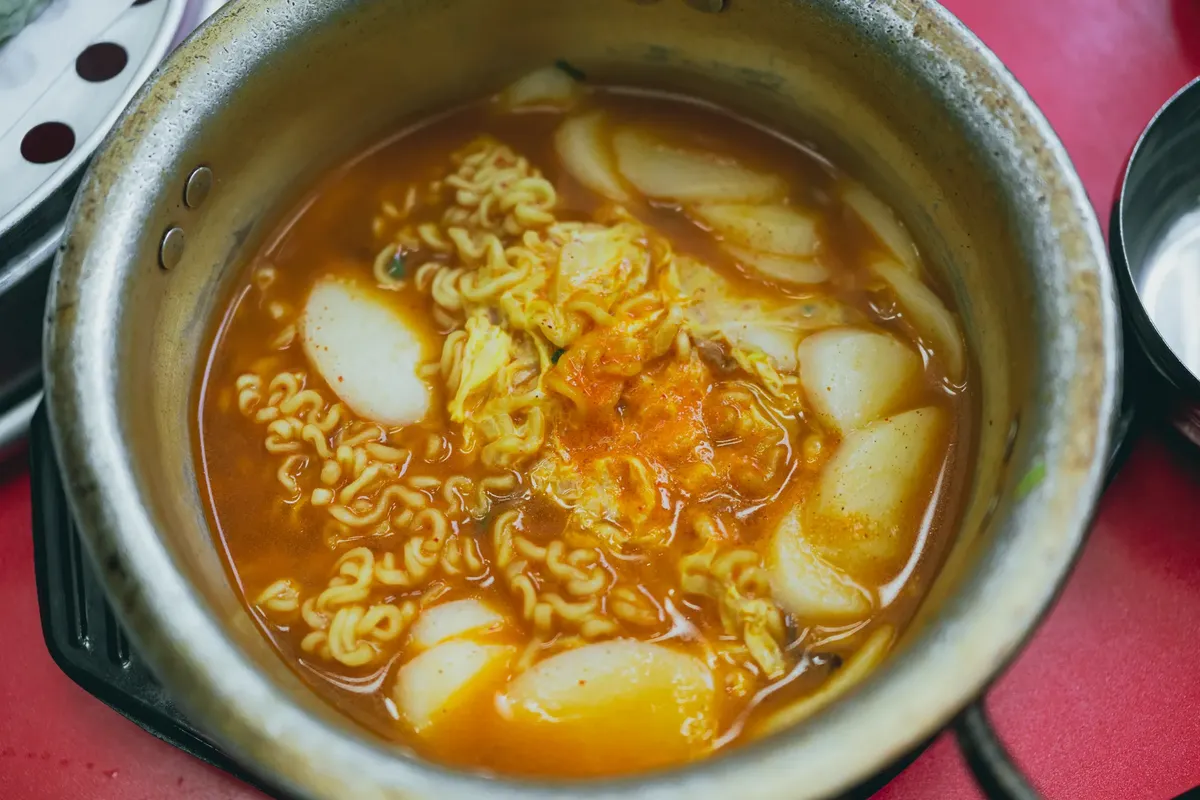
Key takeaways: * Control heat to prevent sauce burning. * Manage starch release for natural thickening. * Use the right liquid-to-solid ratio.
How to master the perfect pan tteokbokki?
In the dim kitchen light, I stir the bubbling sauce to achieve a velvety texture that coats each rice cake.
A seasoned cook stands over a sizzling pan, watching the red sauce bubble around soft rice cakes. Mastering the perfect pan tteokbokki requires understanding how heat interacts with sugar and starch.
You need to manage the moisture levels to ensure the sauce coats the cakes without becoming a sticky, burnt mess.
The process begins with preparing the base liquid and seasonings. You should combine your water or broth with gochujang and sugar in the pan first to create a smooth, uniform sauce. This prevents clumps of seasoning from sticking to the bottom of the pan during the later stages of cooking.
Next, you add the rice cakes to the simmering liquid. Because rice cakes release starch as they heat, the sauce will naturally thicken over time. If you add too many cakes at once without enough liquid, the starch can cause the sauce to become overly thick and gummy too quickly.
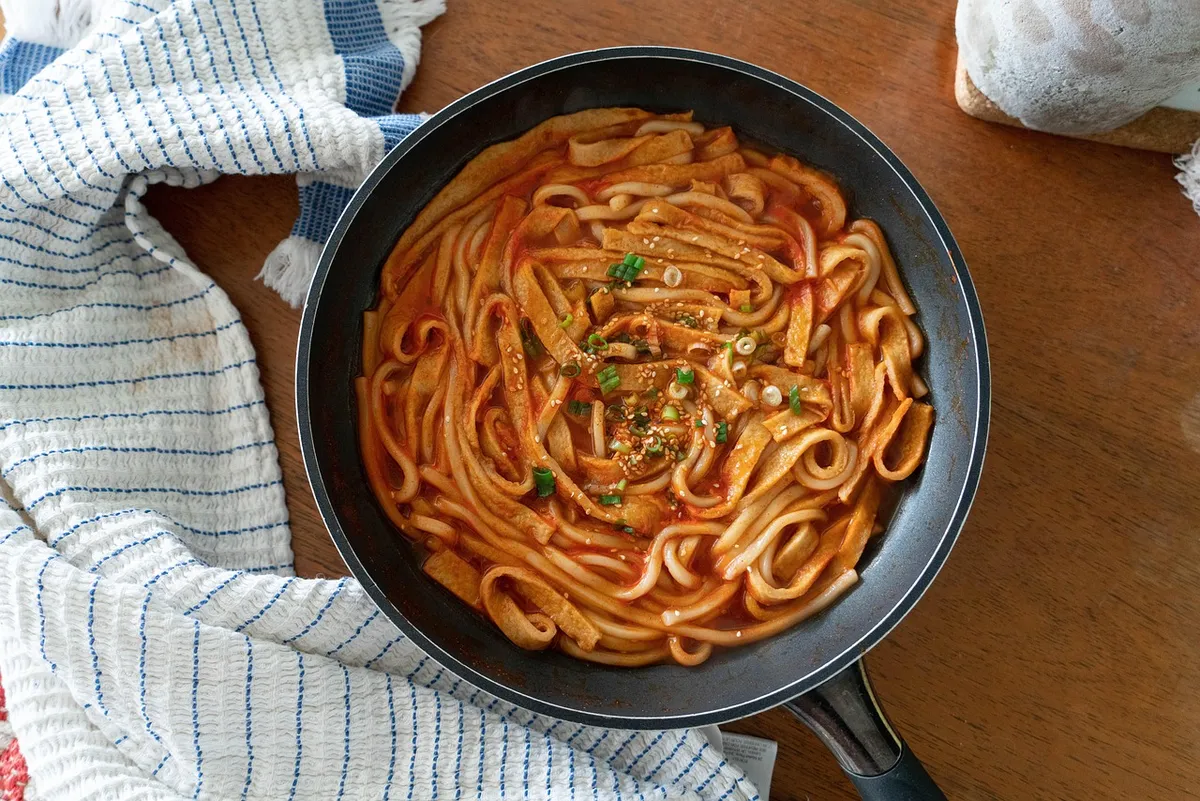
Finally, you adjust the heat to reach the desired consistency. The goal is a glossy, medium-thick sauce that clings to the rice cakes. If the sauce becomes too thick, you can add a small amount of water to loosen it; if it is too thin, continue simmering on medium-low heat to let the starch work.
However, these methods may not yield the same results if using pre-cooked rice cakes that are already quite soft.
Essential steps for consistent results Perfect pan tteokbokki guide
The cook carefully measures ingredients before turning on the stove to ensure a smooth workflow. Following a structured sequence helps prevent the common mistake of overcooking the rice cakes while the sauce is still too watery.
- Prepare the sauce base by mixing water, gochujang, and sugar in a pan over medium heat until the sugar dissolves and the mixture begins to simmer. 2. Add the rice cakes to the pan and stir gently to ensure they are fully submerged in the liquid. 3. Simmer the mixture on medium-low heat, stirring periodically to prevent the rice cakes from sticking to the bottom of the pan.
I once attempted to cook a large batch of rice cakes at once, and the sauce became thick too quickly because I did not account for the starch release. Now, I always monitor the liquid levels closely during the process.
A final check involves testing the texture of a single rice cake. If the cake is soft and chewy but the sauce is thick enough to coat the back of a spoon, the dish is ready to be removed from the heat.
- Prepare the base sauce and heat the pan.
- Add the rice cakes and simmer to absorb flavors.
- Reduce the heat to thicken the sauce to the desired consistency.
Avoiding common mistakes in pan cooking
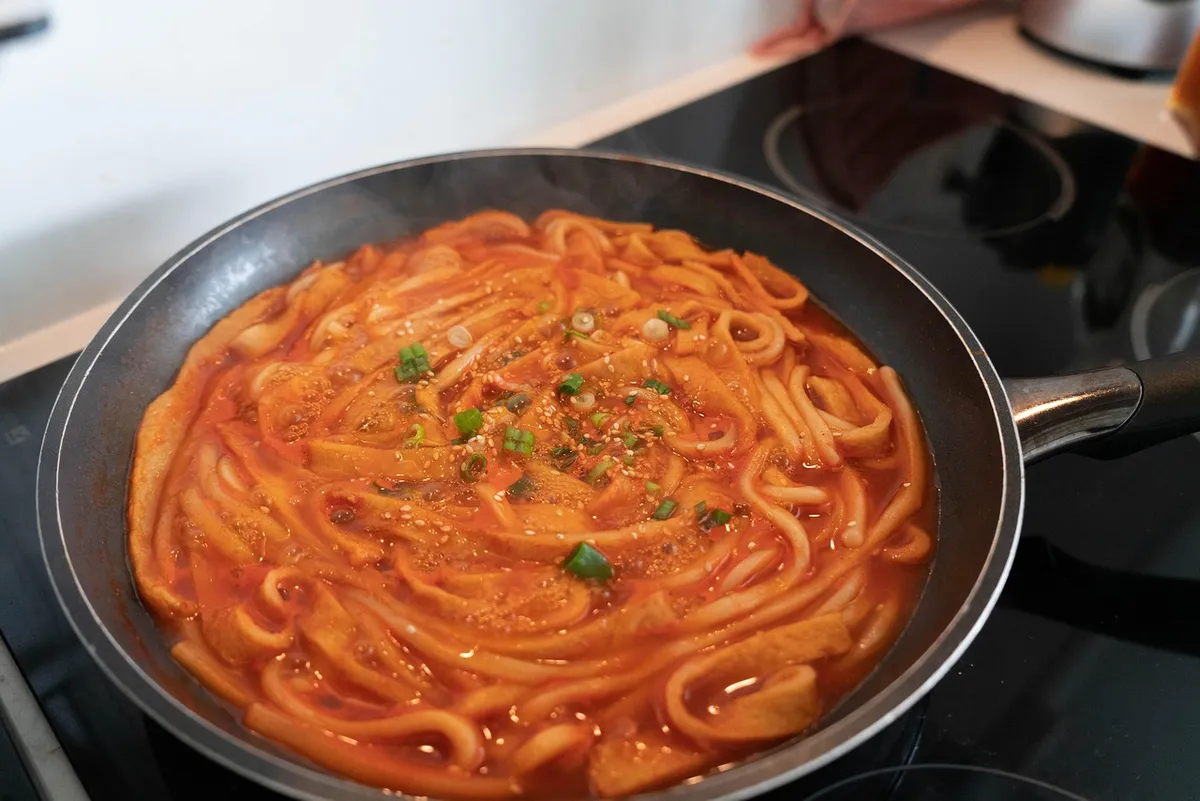
A hand reaches for a spatula to prevent a layer of burnt red sauce from forming on the pan surface. One of the most frequent errors is using heat that is too high, which causes the sugar in the sauce to caramelize and stick to the pan before the rice cakes are cooked through.
Another mistake is adding too much starch-heavy ingredient too early. If you add too many rice cakes to a small amount of liquid, the starch will turn the sauce into a thick paste almost immediately. This makes it difficult to achieve a smooth, glossy finish.
| Problem | Likely Cause | Solution |
|---|---|---|
| Burnt bottom | Heat too high | Lower the temperature |
| Too thick | Excessive starch | Add a small amount of water |
This sequence highlights that the second step is the most critical for preventing sticking.
Adjusting for different preferences
The cook decides to add vegetables to the pan to balance the heavy sauce. You can vary the ingredients to change the texture and flavor profile of the dish without losing the core essence of the recipe.
For a more savory version, you can add fish cakes or sliced onions. The onions will melt into the sauce, adding natural sweetness, while the fish cakes provide a different chewy texture that complements the rice cakes.
If you prefer a cleaner, less heavy sauce, you can reduce the amount of gochujang and increase the amount of broth. This creates a lighter version that still maintains the characteristic spicy-sweet flavor.
However, these adjustments may not be effective if the base sauce is already overly concentrated.
The subject here is Perfect pan tteokbokki guide.
The same subject is also called Easy pan tteokbokki recipe.
The same subject is also called How to make tteokbokki.
The same subject is also called Best pan tteokbokki tips.
The same subject is also called Simple tteokbokki cooking.
This part also covers Avoid tteokbokki mistakes.
This part also covers Master pan cooking skills.
This part also covers Tteokbokki flavor secrets.
Avoid tteokbokki mistakes
Related
- Soft tteokbokki tips: 20 minutes to chewy tteokbokki fix
- How to cook meat burger with safety in mind?
What conditions indicate the secret to perfect tteokbokki has been achieved? 1. The rice cake should exhibit a soft and chewy texture. 2. The sauce must possess enough thickness to coat the back of a spoon. 3. The final product should have a glossy appearance that clings well to the rice cakes.
When the sauce reaches the desired medium-thick consistency, the cook should remove the pan from the heat. This action stops the cooking process, preserving the texture achieved through careful heat management.
The balance between sauce consistency and the starch release from the rice cakes is what defines the secret to perfect tteokbokki.
This sequence shows that the second step is the most important for identifying the correct texture.
How does heat control affect the sauce's final texture? Heat control is crucial because excessive heat causes the sugar in the sauce to caramelize and adhere to the pan surface. Maintaining a medium-low heat allows the starch from the rice cakes to thicken the sauce gradually. If the heat is too high, the sauce risks burning before the rice cakes achieve their intended chewy texture.
If the sauce appears too thin during the simmering stage, continuing the cooking process on medium-low heat permits the starch to continue its thickening action. Conversely, if the sauce thickens too rapidly, the cook must introduce a small amount of water to reintroduce necessary liquid.
Achieving the perfect tteokbokki relies on monitoring these thermal and textural cues throughout the cooking procedure.
However, the impact of heat control may be limited if the pan is too large for the volume of sauce.

Comments 0